CGTN Africa’s Oliver Jarvis went live from Volcanoes National Park to document the conservation efforts of, and to come face-to-face with, the mountain gorillas.
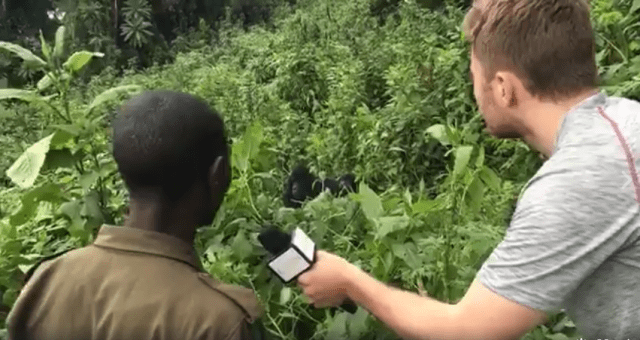
CGTN Africa’s Oliver Jarvis went live from Volcanoes National Park to document the conservation efforts of, and to come face-to-face with, the mountain gorillas.

The world’s rarest marine mammal has found itself becoming rarer and rarer each year. Now, according to a report presented this month to Mexico’s Minister of the Environment and Natural Resources and the Governor of Baja California, only 60 vaquitas remain in the Gulf of California – representing a decline of more than 92 percent since 1997.

“If you love a flower that lives on a star, it is sweet to look at the sky at night. All the stars are a-bloom with flowers . . .”
– The Little Prince, Antoine de Saint-Exupéry
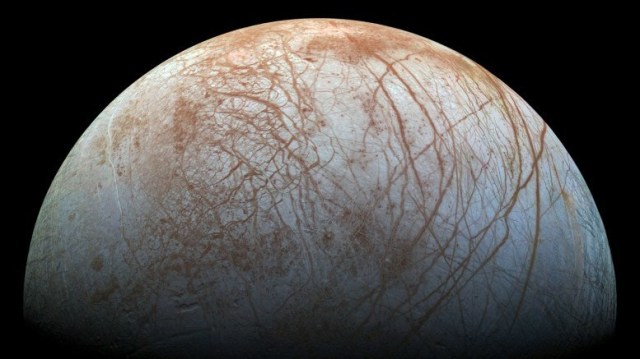
The discovery of life on another planet would light up space in a way for exploration that few could ever truly imagine. Just imagine: a night’s sky with all the stars and planets alight – in this too-big, too-vast universe – hosting some form of life. And each of those forms of life developing on their own terms, perhaps unaware of the myriad other forms of life that surround them. It’s a discovery that would revolutionise late-night dates lying on car bonnets, improve remote camping trips around tiny fires, and change science as we once knew it.
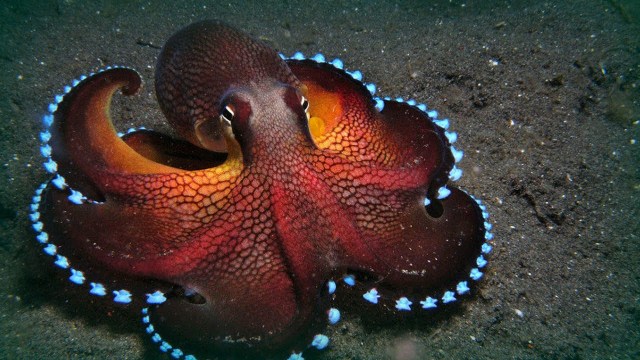
Easily the most bizarre creature in the sea, the humble octopus is a cephalopod of many talents, with DNA like that of no other animal (described by one scientist as looking as though it had been rearranged in a blender). An octopus also holds the record for longest brood period of any creature, with one octo-mum tending her eggs for 4.5 years! Facts suggest there to be 289 recognised species of octopus, and all species have distinct characteristics, from the giant octopus, which can grow up to 9 metres across, to the Wolfi, the world’s smallest octopus, which measures only 1.5 centimetres and weighs less than a gram.
 Oliver jarvis